|
From Artificial Intelligence to Human Languages
Simple Shift is
an IT company dedicated to language engineering. We use
artificial
intelligence to detect patterns within human
languages for various applications like cross-lingual search
engines for e-discovery
and web mining,
automatic classification of multilingual documents, computer-assisted
translation,
etc.
|
CROSS-LANGUAGE SEARCH

|
The most critical information for
your business might not be in
English anymore. Increasingly, people have to search in more
than one language to get more relevant results. mySearch in a
cross-language search tool: On the basis of a query in one language
(for exemple English), it extends the query to many other languages
(like Chinese, Russian,Arabic, etc.), sorts out the most relevant
results and translates them back into the original query language.
Simple Shift developed a cross-language search engine called mySearch.
Read more about mySearch
|
NEWS
|
Creation of an Open Source Foundation
In collaboration with the Free IT Foundation,
Simple Shift set up in 2012 a Foundation named OLANTO
(for "Open Language Tools") to manage and maintain the myCAT and myMT applications and to develop them into a
fully-fledged suite of Computer-Assisted Translation tools.
Feel free to take a look at Olanto's website!
Book Chapter on Automated Patent Classification
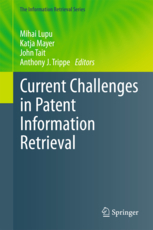
A book called "Current Challenges in Patent Information Retrieval" was
published by Springer in May 2011. This book includes a chapter on
automated classification (with a focus on patent classification) which
was written by Dr. Jacques Guyot and Karim Benzineb.
You can click on the book above to get to the related web page on
Springer's web site.
|
|
|
AUTOMATED CLASSIFICATION
|
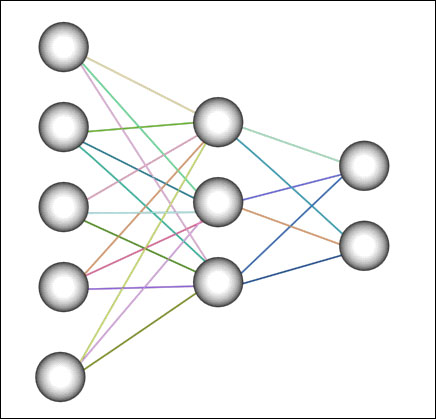
Automated Classification is the process of having a computer sort out large
volumes of electronic documents according to a given classification
which may include thousands of categories. When there are too many
documents to classify them manually (e.g. in the case of
patent classification or during an archiving process), a smarter
solution is to train an artificial intelligence system to do the job.
Simple Shift developed an automatic classifier of documents called myClass.
Read more about myClass
An implementation of myClass in the field of patent classification can be seen
here.
|
|
COMPUTER-ASSISTED TRANSLATION

|
Computer-Assisted Translation (CAT) is translation perforrmed by human translators with
the support of various tools: bi-text aligners, quotation
detectors, translation memories, terminological management systems,
etc.
Simple Shift deploys CAT solutions on the basis of the CAT tools which are managed by the
Olanto Foundation
|
|
MACHINE TRANSLATION
|
Machine Translation (MT) is a translation entirely performed by a computer.
It is fast and cheap, but it needs proof-reading, except if it is used for applications such as
gisting or web mining.
Simple Shift deploys machine translation solutions on the basis of a
product called myMT, which is based on the
Moses
open source decoder and is managed by the
Olanto Foundation
|
|



